



Imagine sending the same generic email to every single person on your list — a first-time visitor, a loyal buyer of three years, a teenager in Dhaka, and a 45-year-old business owner in New York. The result? Low open rates, high unsubscribes, and wasted marketing spend.
Now imagine doing the opposite. You send each person a message that feels written just for them — based on what they’ve bought, where they live, or what they care about. Conversions rise. Customer satisfaction improves. Revenue grows.
That’s the power of customer segmentation.
In this guide, you’ll learn what customer segmentation is, the different types of customer segmentation, proven segmentation strategies, and how a tool like GemCRM — a smart WordPress CRM and email marketing automation platform — empowers small businesses to execute all of this without leaving their WordPress dashboard.
What Is Customer Segmentation?
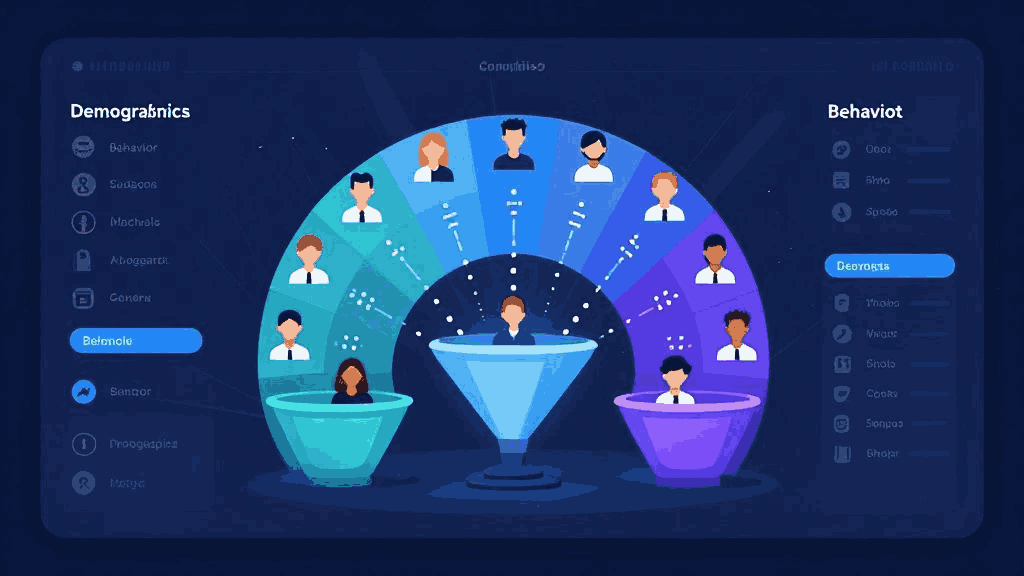
Customer segmentation is the process of dividing your customer base into distinct groups of individuals who share similar characteristics. Rather than treating your entire audience as one homogeneous mass, segmentation allows you to recognize that different customer groups have different needs, preferences, and behaviors — and to market to them accordingly.
Customer segmentation helps businesses:
· Deliver more relevant messaging
· Improve conversion rates and customer satisfaction
· Reduce wasted marketing spend
· Build stronger customer relationships
· Increase customer lifetime value
The customer segmentation process begins with collecting customer data, analyzing patterns, defining segmentation criteria, and then building targeted campaigns for each distinct customer segment.
Why Is Customer Segmentation Important?
Understanding why customer segmentation is important starts with one fundamental truth: not all customers are the same.
Your target market is not a monolith. A small e-commerce store serving both Gen Z shoppers and middle-aged professionals needs different messaging, different product recommendations, and different email timing for each group.
Here’s why the benefits of customer segmentation are impossible to ignore:
1. Higher Conversion Rates
Personalized messaging resonates. When customers receive content that addresses their specific needs, they’re far more likely to take action. Targeted campaigns consistently outperform generic blasts on conversion rates and customer satisfaction.
2. Improved Customer Retention
When customers feel understood, they stay loyal. A strong customer segmentation strategy keeps your existing customers engaged long after their first purchase, dramatically improving customer loyalty and reducing churn.
3. Smarter Use of Marketing Budget
Segmentation allows you to focus your marketing efforts on the segments most likely to convert, rather than wasting resources broadcasting to uninterested audiences.
4. Better Customer Experience
When you use customer data to send relevant content at the right time, the overall customer experience improves dramatically — which directly boosts customer satisfaction.
5. Deeper Understanding of Customer Motivations
The customer segmentation analysis process reveals customer motivations, preferences, and purchase patterns you might never uncover otherwise.
Types of Customer Segmentation
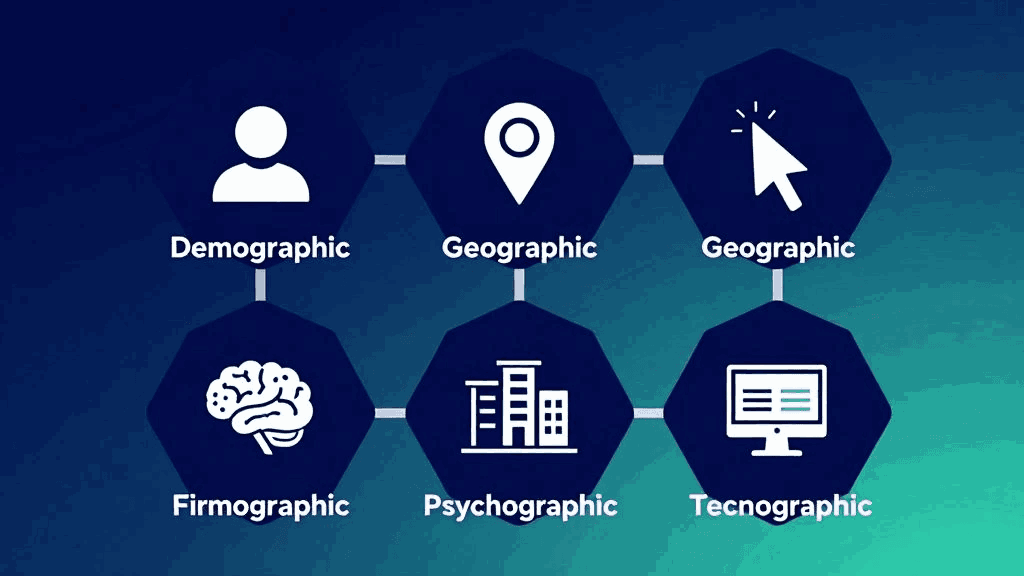
There are several well-established types of customer segmentation that marketers rely on. A smart customer segmentation model typically combines two or more of these approaches.
1. Demographic Segmentation
Demographic segmentation divides your audience based on measurable population characteristics such as age, gender, income level, education, occupation, and family status.
This is one of the most commonly used segmentation types because demographic data is relatively easy to collect and is highly predictive of purchasing behavior. For example, a business selling premium financial planning tools will market differently to a 28-year-old freelancer than to a 55-year-old corporate executive.
Example: A clothing brand segments by age and gender, sending back-to-school promotions to parents of school-age children while promoting professional attire to working adults.
2. Geographic Segmentation
Geographic segmentation groups customers based on their physical location — country, region, city, climate, or even urban vs. rural setting. This type of segmentation is essential for businesses with location-specific offerings or varying customer needs across regions.
Example: A food delivery app promotes hot soup campaigns to customers in cold-weather regions during winter, while customers in warm climates receive promotions for cold beverages. GemCRM makes geographic segmentation intuitive by allowing you to tag and segment customers based on location data collected through your forms and purchase history — all from within your WordPress dashboard.
3. Behavioral Segmentation
Behavioral segmentation is arguably the most powerful of all segmentation approaches. It groups customers based on customer behavior — how they interact with your brand, products, and content.
Key behavioral segmentation variables include:
· Purchase history and frequency
· Pages visited on your website
· Email open and click behavior
· Cart abandonment patterns
· Product usage habits
· Stage in the buying journey
Example: An online course platform using GemCRM identifies students who enrolled but haven’t logged in for 14 days. It automatically triggers a re-engagement email sequence with encouragement, a tutorial highlight, and a limited-time discount — recovering at-risk students before they churn.
4. Psychographic Segmentation
Psychographic segmentation dives deeper than demographics to understand customer preferences, values, interests, lifestyle, and personality traits. While harder to measure, psychographic data produces some of the most emotionally resonant marketing.
Psychographic segmentation criteria might include:
· Values and beliefs (sustainability, family, ambition)
· Interests and hobbies
· Personality traits (introvert vs. extrovert)
· Lifestyle choices
· Social class and aspirations
Example: A wellness brand discovers through customer segmentation research that a large specific customer segment consists of health-conscious millennials motivated by environmental values. They craft email campaigns emphasizing eco-friendly packaging and organic sourcing, dramatically improving engagement.
5. Firmographic Segmentation
Firmographic segmentation applies primarily in B2B contexts. Rather than individual characteristics, it segments customers based on company-level attributes: industry, company size, business stage, geographic location, and decision-maker roles.
Example: A SaaS company using GemCRM segments its contact list by company size — sending startup-friendly pricing to small teams and enterprise ROI case studies to larger accounts.
6. Technographic Segmentation
Technographic segmentation groups customers by the technology stack they use. For software companies, digital agencies, and tech-adjacent businesses, this is a highly effective way to tailor messaging. Technographic segmentation data might include devices used, software platforms, email clients, and browser preferences.
Example: GemCRM targets WordPress users as a distinct technographic segment, knowing that WordPress site owners need a self-hosted, GDPR-conscious CRM that integrates natively with their existing setup.
Customer Segmentation Methods: How to Actually Segment Your Customers
Understanding customer segmentation methods at a theoretical level is one thing. Implementing them effectively is another. Here’s how to actually segment your customers step by step.
Step 1: Define Your Segmentation Goals
Before you analyze your customer data, decide what you’re trying to achieve. Are you trying to reduce churn, increase average order value, re-engage dormant subscribers, or upsell a new product? Your goal determines which segmentation approach is most appropriate.
Step 2: Collect and Organize Customer Data
You can’t build customer segments based on data you don’t have. Collect customer data through sign-up forms, purchase histories, email engagement analytics, website behavior tracking, surveys, and CRM interaction logs. GemCRM makes it easy to organize customer data by automatically syncing contacts from forms, purchases, and registrations directly into your WordPress dashboard.
Step 3: Choose Your Segmentation Model
Select the most appropriate customer segmentation model for your business. For most small businesses, a combination of demographic segmentation, behavioral segmentation, and purchase-based segmentation delivers the highest ROI.
Step 4: Build Your Customer Profiles
Create detailed customer profiles for each segment. A good customer profile includes demographic data, purchase behavior and frequency, goals and pain points, technology used, and average spend and lifetime value.
Step 5: Create Targeted Campaigns for Each Segment
This is where segmentation allows you to go from data to dollars. Build tailored email campaigns, sequences, and automation workflows for each of your distinct customer segments. With GemCRM, you can assign specific lists and tags to each segment, then set up automated email sequences that fire based on triggers — a purchase, a form submission, or an inactivity period.
Step 6: Measure, Test, and Refine
Your customer segmentation analysis shouldn’t end after launch. Continuously monitor open rates, click rates, conversion rates, and unsubscribes — and refine your segmentation groups over time as your customer data evolves.
Segmentation Strategies That Actually Drive Sales
Let’s look at concrete segmentation strategies small businesses can deploy today.
Strategy 1: RFM Segmentation (Recency, Frequency, Monetary)
RFM is one of the most proven approaches to segmentation for e-commerce and service businesses. It scores customers based on Recency (how recently they purchased), Frequency (how often they buy), and Monetary (how much they spend).
This customer segmentation strategy instantly identifies your VIP customers, at-risk customers, and win-back candidates.
GemCRM in action: Use GemCRM’s tagging system to label customers by purchase behavior and create separate automated sequences — a loyalty reward sequence for VIPs, and a re-engagement sequence for lapsed buyers.
Strategy 2: Lifecycle Stage Segmentation
Divide your audience based on where they are in the customer relationship journey: Awareness, Consideration, Conversion, Retention, and Advocacy. Each lifecycle stage requires entirely different messaging. GemCRM’s email sequences let you build distinct nurture paths for each stage — automatically.
Strategy 3: Engagement-Based Segmentation
Use segmentation data from your email campaigns to create engagement tiers: highly engaged (opens every email), moderately engaged (opens occasionally), and disengaged (hasn’t opened in 60+ days). This segmentation approach allows you to send your best content to engaged subscribers and run re-engagement campaigns for the disengaged.
Strategy 4: Product-Interest Segmentation
If your business sells multiple product lines or serves multiple customer needs, segment based on which products customers have shown interest in.
Example: A digital marketing agency uses GemCRM to tag contacts based on which service page they visited — SEO, paid ads, or social media. Each tag triggers a different email sequence delivering relevant case studies and service-specific offers.
Strategy 5: Geographic + Behavioral Combination Segmentation
Some of the most effective different segmentation approaches combine two variables. Pairing geographic segmentation with behavioral data creates hyper-relevant experiences that feel personal rather than automated.
How GemCRM Makes Customer Segmentation Easy for Small Businesses
Most small businesses understand the value of customer segmentation in theory but struggle to implement it in practice. They lack the technical skills, the budget for enterprise CRM tools, or the time to manage multiple disconnected platforms.
GemCRM solves all three problems. Built specifically for WordPress, GemCRM is a self-hosted, all-in-one customer relationship management platform that brings powerful segmentation, email automation, and contact management directly into your existing WordPress dashboard — no external tools, no SaaS subscriptions, no data leaving your server.
Smart Tagging and Lists
GemCRM’s smart tagging system is the foundation of its customer segmentation capability. You can segment your customers using:
· Lists: Broad groupings (newsletter subscribers, customers, VIP members)
· Tags: Granular behavioral labels (purchased Product X, attended Webinar Y, downloaded Guide Z)
· User roles: WordPress-native segmentation for membership sites and LMS platforms
Automated Email Sequences
GemCRM’s sequence builder lets you create step-by-step automated follow-up emails that run on their own. This is the engine behind effective customer retention strategies — ensuring every new subscriber, customer, or lead receives a consistent, personalized onboarding experience without any manual effort.
Lead Collection Forms
GemCRM’s drag-and-drop form builder lets you capture leads directly on your WordPress site. Each form can auto-assign specific lists and tags to new subscribers — meaning segmentation data is collected from the very first touchpoint.
Unified Contact Dashboard
All your customer data lives in one clean dashboard. View contact history, assigned tags, list memberships, email engagement, and deal status — giving your team a 360-degree view of every contact. This unified view is essential for understanding customer needs and personalizing customer support interactions.
Analytics and Optimization
GemCRM’s analytics give you the data you need to improve your customer segmentation process over time — open rates, click rates, unsubscribes, and engagement trends by segment. Use this data to refine your segmentation variables, test new messaging, and improve customer engagement continuously.
Deal Management
Beyond email, GemCRM includes deal management — create deals, assign team members, set tasks, and track budgets. This bridges the gap between marketing segmentation and sales pipeline management, supporting true end-to-end customer relationship management.
Works with Any SMTP Service
GemCRM connects seamlessly with all major email delivery services — SendGrid, Mailgun, Amazon SES, Postmark, Gmail, and more — giving small businesses enterprise-grade deliverability at small business prices.
Real-World Examples: Customer Segmentation in Action with GemCRM
Example 1: eCommerce Store
A WordPress WooCommerce store uses GemCRM to create three customer segments based on purchase history:
· New customers (1 purchase): Receive a 5-email welcome sequence introducing the brand, popular products, and a 10% second-purchase discount.
· Regular customers (2–5 purchases): Receive monthly product roundups and early access to sales.
· VIP customers (6+ purchases): Receive exclusive offers, early product launches, and a personal anniversary email.
Result: 34% increase in repeat purchase rate, measurable improvement in customer lifetime value.
Example 2: Online Course Platform (LMS)
An Academy LMS-powered platform uses GemCRM to track customer behavior at the course level:
· Students completing Module 1 are tagged ‘Active Learner’ and receive encouragement + Module 2 preview.
· Students inactive for 7 days receive a re-engagement sequence.
· Course graduates receive an upsell sequence for advanced courses.
Result: 28% reduction in course abandonment, improved customer success outcomes.
Example 3: Digital Agency
A small agency uses GemCRM’s firmographic segmentation to separate prospects by company size using tags applied through their intake form:
· Startups receive a ‘Getting Started’ email sequence focused on affordable packages and quick wins.
· Mid-size companies receive case studies and ROI-focused content.
· Enterprise prospects receive white-glove onboarding offers and custom proposal invitations.
Result: Higher proposal acceptance rates and more relevant overall customer interactions.
Common Customer Segmentation Mistakes to Avoid
· Creating too many micro-segments makes campaigns unwieldy. Start with 3–5 customer groups and expand as you gather more data.Over-Segmenting:
· Customer preferences and behaviors change. Regularly audit your segmentation tags and lists.Using Stale Data:
· Segmentation helps you send relevant content, but it doesn’t replace genuine value.Ignoring the Customer Experience:
· A/B test your campaigns within each segment. Even within a well-defined customer segment, different messages resonate differently.Failing to Test:
· The segmentation process is continuous. As your business grows and customer expectations evolve, your segmentation model must evolve with it.Treating Segmentation as a One-Time Task:
The Future of Customer Segmentation: AI and Predictive Personalization
The next frontier of customer segmentation is predictive — using AI and machine learning to anticipate customer needs before they’re expressed. Tools are increasingly moving beyond static segments toward dynamic ones that update in real time based on customer behavior.
For small businesses using platforms like GemCRM, this means automated tag updates based on behavioral triggers, dynamic email content that adapts to individual engagement history, and predictive lead scoring to identify customer lifetime value potential early.
GemCRM is actively developing its automation and segmentation capabilities, making enterprise-grade customer segmentation methods increasingly accessible to small and growing businesses.
Key Takeaways: Customer Segmentation Best Practices
· Customer segmentation is the process of grouping your audience by shared characteristics to deliver more relevant, personalized marketing.
· The main types of customer segmentation are demographic, geographic, behavioral, psychographic, firmographic, and technographic.
· Effective segmentation strategies combine multiple variables and are continuously refined based on data.
· Segmentation helps improve conversion rates, customer retention, customer satisfaction, and overall marketing ROI.
· GemCRM gives small businesses a powerful, self-hosted WordPress platform to collect customer data, build smart segments, automate email sequences, and measure results — all from one unified dashboard.
Start Segmenting Smarter with GemCRM
Whether you’re running an eCommerce store, an online course platform, a digital agency, or a small growing business, the path to higher sales runs directly through better customer segmentation.
GemCRM makes it simple. No external tools. No complex integrations. No technical expertise required. Just powerful, WordPress-native customer relationship management that turns your contacts into customers — and your customers into loyal advocates.