



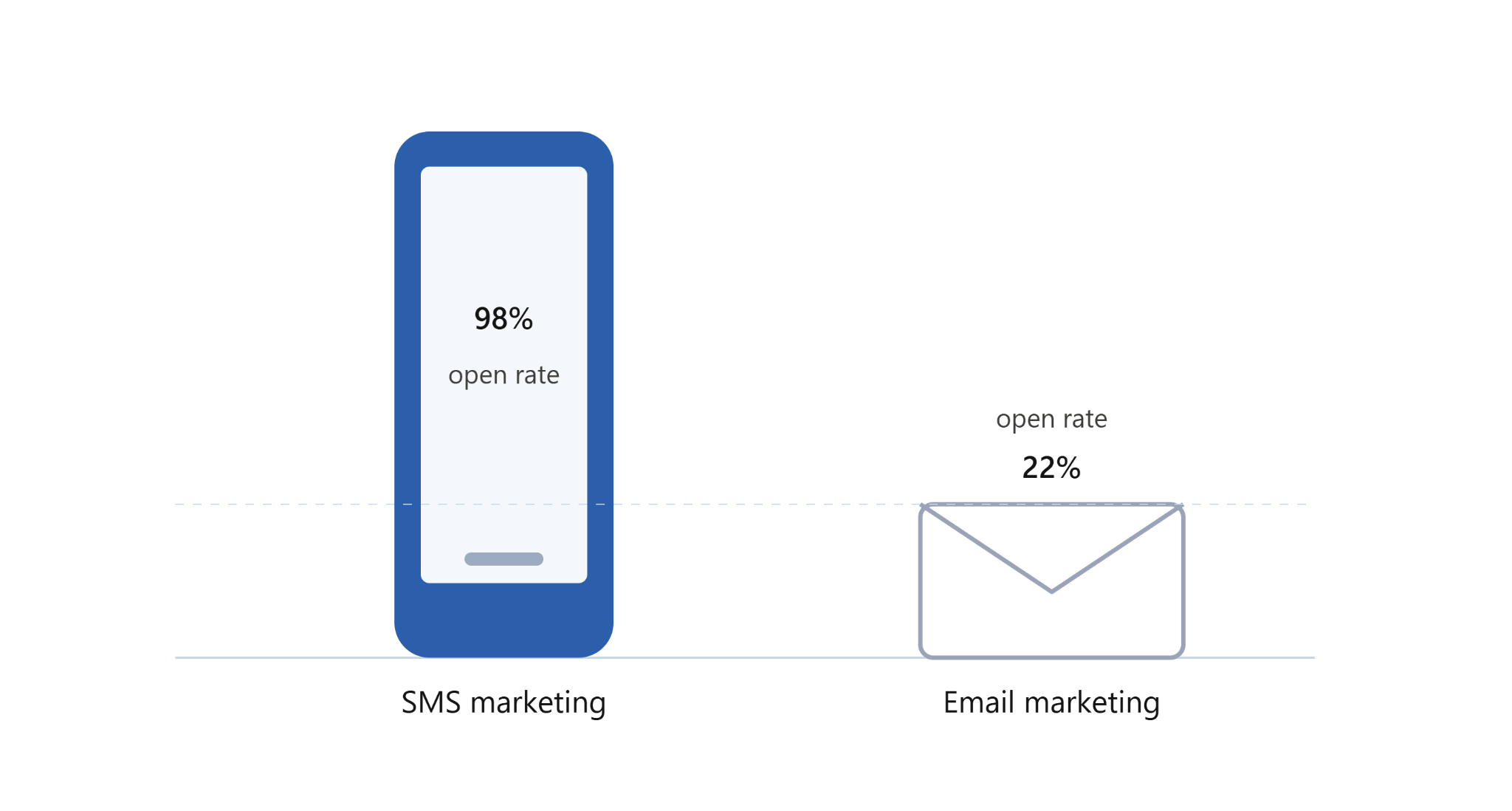
If you run a small business and you’re not using SMS marketing yet, you’re leaving money on the table. Open rates for text messages routinely hit 95–98%, compared to the 20–25% average for email marketing. People read texts. They don’t always read emails. That single fact is why SMS marketing has become one of the fastest-growing channels in digital marketing — and why every small business owner searching for a reliable way to reach customers should understand how to use SMS marketing the right way.
This guide covers everything you need to get started with SMS marketing: what it is, why it works, how to build an SMS subscriber list the right way, the best practices that keep you compliant, real SMS marketing examples you can copy, and how to choose the best SMS marketing software for your business in 2026.
1. What Is SMS Marketing?
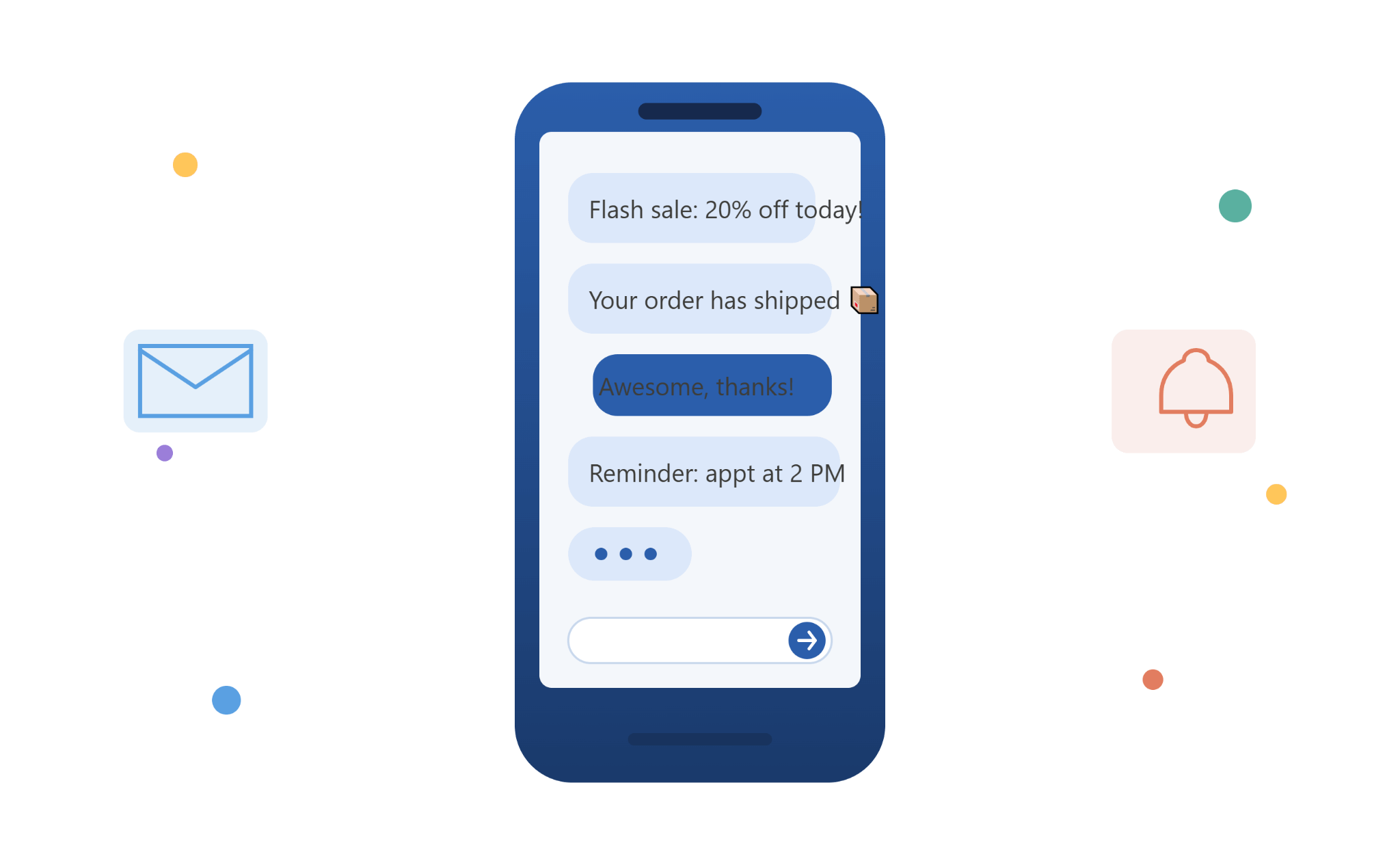
SMS marketing is the practice of sending promotional or transactional text messages to customers who have opted in to receive them. SMS stands for “Short Message Service” — the technology behind standard text messages. As a marketing channel, SMS marketing lets a business send a text message directly to a customer’s phone to share a sale, a reminder, a confirmation, or an update.
Unlike social media posts that depend on an algorithm, or email marketing that competes with a crowded inbox, a text message lands directly on a device people check constantly. The average person checks their phone over 90 times a day. That’s the core appeal of SMS marketing for small businesses: it meets customers where their attention already is.
SMS marketing messages generally fall into two categories:
- Promotional SMS messages: sales announcements, discount codes, new product launches, event invitations
- Transactional SMS messages: order confirmations, appointment reminders, shipping updates, account alerts
Both types matter for a complete marketing strategy, and the best SMS marketing software supports both.
2. Why SMS Marketing Works So Well for Small Businesses
Small business owners often assume SMS marketing is only for big retail brands. That’s no longer true. The barrier to entry has dropped, and the return on a well-run SMS campaign is hard to beat with any other marketing channel. Here’s why SMS marketing works so well:
- Exceptionally high open rates: Text messages are typically read within three minutes of being received. Compare that to email marketing, where messages can sit unread for hours or get filtered into a spam folder.
- Direct, personal communication: A text message feels more personal than an email or an ad. When used well — with personalization and a clear, friendly tone — SMS marketing builds a stronger relationship between a small business and its customers than most other channels.
- Fast action and faster results: Because people see texts almost immediately, SMS campaigns drive faster responses. A flash sale sent via text message can generate visible results within the hour, which is something email marketing rarely achieves at the same speed.
- Low cost relative to other marketing tools: Most SMS marketing platforms charge per message sent, and rates have become increasingly affordable for small business budgets. Compared to paid ads, SMS marketing for small business delivers a strong return without requiring a large marketing budget.
- Works alongside every other channel: SMS marketing doesn’t replace your other marketing efforts — it strengthens them. Many businesses use SMS marketing to support email marketing, remind customers about content marketing pieces, or drive traffic during a broader marketing campaign.
3. SMS Marketing vs. Email Marketing: Which Should You Use?
This is one of the most common questions small business owners ask, and the honest answer is: use both. SMS marketing and email marketing aren’t competitors — they’re complementary parts of the same overall marketing strategy.
|
Factor |
SMS Marketing |
Email Marketing |
|
Average open rate |
95–98% |
20–25% |
|
Average response time |
Under 3 minutes |
Hours to days |
|
Best for |
Urgent updates, time-sensitive offers, reminders |
Detailed content, newsletters, storytelling |
|
Character limit |
Short and direct (160 characters typical) |
No real limit |
|
Cost per send |
Slightly higher per message |
Very low per send |
|
Customer perception |
Immediate, personal |
Expected, less urgent |
A smart small business uses email marketing to nurture, educate, and tell a longer story, while using SMS marketing to remind, alert, and drive immediate action. Businesses that combine SMS and email marketing into a single coordinated marketing program consistently outperform those that rely on just one channel.
4. How to Get Started with SMS Marketing
Getting started with SMS marketing is more straightforward than most small business owners expect. Here’s the practical path:
Step 1: Choose an SMS marketing platform. You’ll need software that handles compliance, list management, message sending, and reporting. Most providers let you sign up for a free trial so you can test the platform before committing.
Step 2: Set up a dedicated business phone number or short code. Reputable SMS marketing software will provide this as part of onboarding. Never use a personal or business landline number for bulk SMS — carriers will block it.
Step 3: Build your opt-in process. Customers must give explicit permission before you send sms marketing messages to them. This is both a legal requirement and a trust-building practice.
Step 4: Segment your subscriber list. Group contacts by purchase history, location, or engagement level so your text message marketing feels relevant rather than generic.
Step 5: Write your first message. Keep it short, clear, and action-oriented. Include your business name, the offer or update, and a clear next step.
Step 6: Send a test, then launch. Always test how your message displays before sending it to your full list.
Step 7: Track your results. Most SMS marketing software includes a marketing report showing delivery rates, click-through rates, and opt-outs, so you can refine your approach.
5. Building Your SMS Subscriber List the Right Way
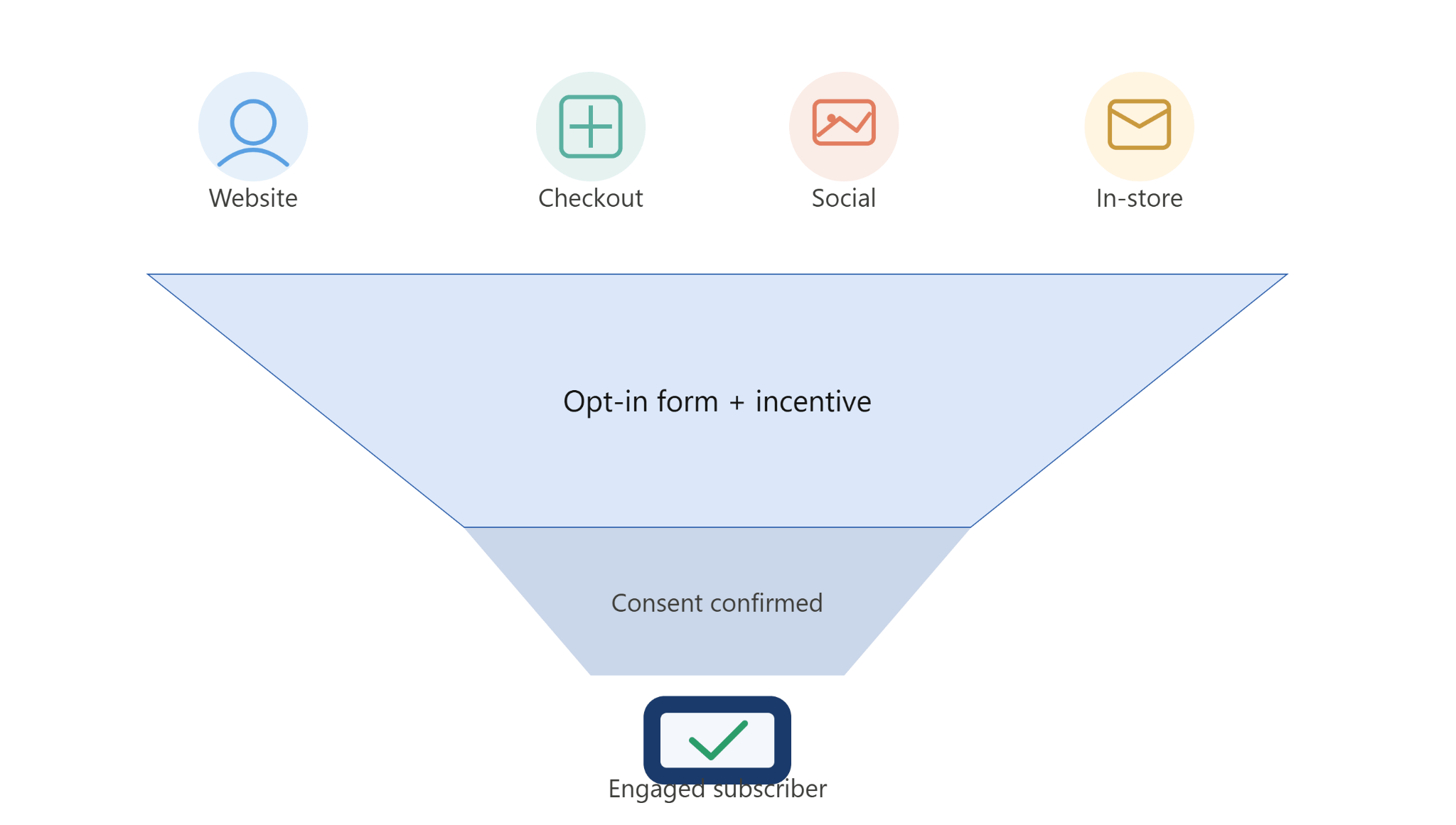
Your SMS subscriber list is the foundation of every successful SMS marketing campaign. A small, engaged list of customers who actually want to hear from you will always outperform a large list of uninterested numbers. Here’s how to build it properly:
- Use clear opt-in forms: Add an SMS signup option to your website, checkout page, and in-store point of sale. Be explicit about what subscribers will receive and how often.
- Offer a real incentive: A discount code, early access to a sale, or a free resource in exchange for signing up gives customers a reason to opt in to text message marketing.
- Promote your SMS list across every channel: Mention it in your email marketing footer, on social media, on receipts, and during checkout. The more visibility your sign-up opportunity has, the faster your list grows.
- Make opting out just as easy as opting in: Every message should include simple instructions to unsubscribe (typically replying “STOP”). This isn’t optional — it’s required by law, and it also keeps your list full of genuinely interested subscribers.
- Never buy or rent SMS lists: Sending marketing messages to numbers that haven’t opted in directly into your business is both illegal under most regulations and a fast way to get your number blocked by carriers.
6. SMS Marketing Best Practices for 2026
Following SMS marketing best practices protects your business legally and keeps your campaigns effective. These are the standards every small business should follow:
- Get explicit consent before sending anything: This is the single most important rule in SMS marketing. Consent must be specific to SMS — checking a box for email marketing doesn’t cover text message marketing.
- Identify your business in every message: Customers should immediately recognize who’s texting them. Open with your business name.
- Keep messages short: The ideal length is one to two sentences. SMS marketing works because it’s quick to read — don’t undermine that with long blocks of text.
- Send at reasonable hours: Most regulations require messages to be sent between 8 a.m. and 9 p.m. in the recipient’s time zone. Beyond the legal requirement, it’s simply good practice.
- Don’t overdo frequency: A good rule of thumb is no more than four to eight marketing messages per month, depending on your industry. Customers who feel spammed will opt out quickly.
- Personalize where possible: Using a customer’s name or referencing their purchase history makes a text message marketing campaign feel relevant rather than mass-produced.
- Always include a clear call to action: Every message should tell the recipient exactly what to do next — “Shop now,” “Reply YES to confirm,” or “Show this text in-store.”
- Track performance and adjust: Review your marketing report regularly. If a particular type of message underperforms, adjust your sms marketing strategy rather than repeating what isn’t working.
7. Types of SMS Marketing Messages (With Examples)
Understanding the different types of SMS marketing messages helps you build a more complete strategy. Here are real sms marketing examples small businesses can adapt:
Welcome message
“Welcome to [Business Name]! You’re now on the list for exclusive deals. Reply STOP anytime to opt out.”
Flash sale announcement
“⚡ 24-hour flash sale! Get 20% off everything in-store and online. Use code FLASH20 at checkout. Shop now: [link]”
Appointment reminder (transactional)
“Hi [Name], this is a reminder of your appointment tomorrow at 2 PM with [Business Name]. Reply C to confirm or R to reschedule.”
Abandoned cart reminder
“You left something in your cart! Complete your order in the next 2 hours and get free shipping. [link]”
Loyalty/VIP message
“You’ve earned a $10 reward for being a loyal customer! Use it on your next purchase before it expires Friday.”
Order/shipping update (transactional)
“Good news — your order has shipped! Track it here: [link]”
Event invitation
“You’re invited! Join us this Saturday for our anniversary sale, 10 AM–6 PM. Mention this text for a free gift.”
Re-engagement message
“We miss you! It’s been a while since your last visit. Here’s 15% off to welcome you back: [code]”
Each of these examples follows the same structure: short, clear, branded, and built around one specific action. That structure is what separates effective sms marketing campaigns from messages that get ignored or reported as spam.
8. Choosing the Best SMS Marketing Software
The right SMS marketing platform makes the difference between a smooth marketing effort and a frustrating one. When evaluating sms marketing software, small business owners should look for:
- Compliance tools built in: The platform should automatically manage opt-ins, opt-outs, and quiet hours so you don’t have to track compliance manually.
- List segmentation: The ability to group your sms list by behavior, location, or purchase history makes your campaigns far more effective.
- Two-way texting: The best sms marketing software lets customers reply to messages, not just receive them — this supports customer service and confirms higher engagement.
- Integration with your other marketing tools: Look for a platform that connects to your email marketing software, e-commerce platform, or CRM, so your overall marketing strategy stays unified.
- Automation and triggers: Automated messages — like a welcome text after signup or a reminder before an appointment — save time and keep your marketing program running without constant manual work.
- Clear reporting: A useful marketing report should show delivery rates, click-through rates, opt-out rates, and revenue attribution where applicable.
- Transparent pricing: Many providers let you sign up for a free trial or free tier so you can test features before paying. Compare per-message costs as your sms list grows, since pricing structures vary significantly between providers.
Most small businesses don’t need every advanced feature on day one. Start with a platform that covers compliance, segmentation, and basic automation, then expand into more advanced sms marketing tools as your subscriber list and marketing budget grow.
9. SMS Marketing Compliance: What Every Small Business Must Know
Compliance isn’t optional in SMS marketing, and the rules are stricter than most other digital marketing channels. In the United States, SMS marketing is regulated primarily by the Telephone Consumer Protection Act (TCPA) and overseen by carrier-level requirements (10DLC registration for businesses sending from local numbers). Key compliance points include:
Written consent is required before sending any promotional text message marketing. Verbal consent or assumed consent is not sufficient.
- Every message needs an opt-out method, almost always “Reply STOP to unsubscribe.”
- Businesses must honor opt-outs immediately — continuing to message someone after they’ve opted out can result in significant fines.
- Sending windows are restricted, typically 8 a.m. to 9 p.m. in the recipient’s local time zone.
- Message content must be accurate — no misleading offers, no disguised marketing as a personal text.
- Businesses sending at volume should register their number (10DLC for U.S. businesses) to avoid carrier filtering and ensure deliverability.
⚠️ Important
Most reputable SMS marketing platforms build these protections into the product, but ultimate responsibility for compliance rests with the business sending the messages. Reviewing your provider’s compliance documentation before launching your first sms marketing campaign is a smart, low-cost safeguard.
10. Common SMS Marketing Mistakes to Avoid
Even well-intentioned small businesses make these errors when they first start using SMS marketing:
- Texting too often: Bombarding subscribers with daily messages is the fastest way to drive opt-outs and damage trust.
- Sending generic, untargeted messages: A message that doesn’t reflect the customer’s interests or purchase history feels like spam, even if it technically isn’t.
- Skipping the opt-in step: Some businesses try to import existing customer phone numbers from other systems without proper consent. This is a compliance risk and a reputation risk.
- Ignoring two-way conversations: When customers reply to a message, failing to respond creates a poor experience and wastes the personal nature of the channel.
- Using overly salesy language in every message: A constant stream of “BUY NOW” messages fatigues subscribers. Mix promotional content with helpful reminders, useful updates, and occasional appreciation messages.
- Not tracking performance: Without reviewing open rates, click rates, and opt-outs, it’s impossible to know whether your sms marketing strategy is actually working.
11. Final Thoughts
SMS marketing for small businesses isn’t a passing trend — it’s become a foundational marketing channel for businesses that want a direct, high-engagement way to reach customers. The path to success is straightforward: get proper consent, build your list thoughtfully, follow compliance best practices, keep your messages short and valuable, and choose sms marketing software that fits your business size and goals.
Whether you’re sending your first welcome text or refining a mature sms marketing strategy, the businesses that treat text message marketing as a relationship-building channel, not just a sales tool, are the ones that see the strongest long-term results. Start small, stay consistent, track what works, and let SMS marketing become a genuine growth engine for your business in 2026 and beyond.
12. Frequently Asked Questions
1. Is SMS marketing legal for small businesses?
Yes, SMS marketing is legal as long as businesses follow consent and compliance requirements such as the TCPA in the United States. This means obtaining explicit opt-in consent, providing an opt-out option in every message, and respecting sending time windows.
2. How much does SMS marketing cost for a small business?
Costs vary by provider and message volume, but most sms marketing software charges a small per-message fee or a monthly subscription based on list size. Many platforms offer a free trial, making it easy to test the channel before committing to a paid plan.
3. How often should a small business send SMS marketing messages?
Most experts recommend four to eight marketing messages per month, depending on your industry and customer expectations. Sending more than that significantly increases opt-out rates.
4. What’s the difference between SMS marketing and transactional SMS?
Transactional SMS messages — like order confirmations or appointment reminders — are operational and expected by the customer. Promotional SMS marketing messages are sent to drive sales or engagement and require separate marketing consent in many cases.
5. Can I use SMS marketing alongside email marketing?
Yes, and you should. SMS marketing and email marketing serve different purposes within a complete marketing strategy. Email is better for detailed content; SMS is better for urgent, time-sensitive communication.
6. Do customers actually like receiving SMS marketing?
Studies consistently show that customers who opt in to SMS marketing engage with it at a far higher rate than email or social media, provided businesses follow best practices around frequency, relevance, and personalization.