



Most businesses send the same message to everyone — same email, same ad, same offer. And most businesses wonder why their conversion rates are stuck at 2%.
The problem isn’t your product. It’s not your copy. It’s that you’re treating a 22-year-old first-time buyer exactly like a 45-year-old loyal customer who spends $500 a year with you.
Customer segmentation fixes that. And in 2026, with AI doing the heavy lifting, there’s no excuse not to use it.
What Is Customer Segmentation?
Customer segmentation is the process of dividing your customer base into distinct groups — called segments — based on shared characteristics, behaviors, or needs. Each segment gets messaging, offers, and experiences designed specifically for them.
It sounds simple. But done right, it’s one of the most powerful levers in modern marketing.
There are four core segmentation types businesses work with: demographic (age, income, location), behavioral (purchase history, usage patterns), psychographic (values, lifestyle, motivations), and geographic (location-based lifestyle patterns). Most mature strategies layer two or more of these together.
Why Customer Segmentation Matters More Than Ever in 2026
Here’s the truth: the companies winning right now aren’t spending more on ads. They’re spending smarter — because they know exactly who they’re targeting.
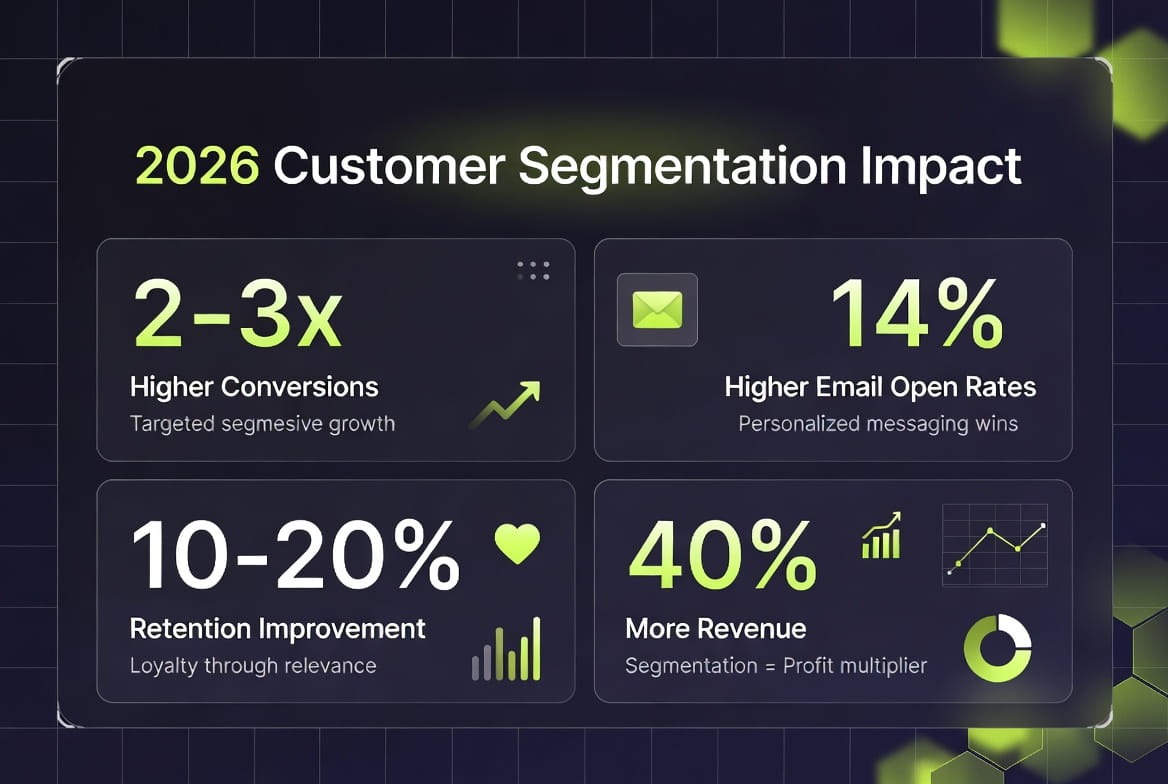
Companies that use advanced segmentation see 2–3x higher conversion rates. According to McKinsey, 71% of consumers expect personalized interactions — and 76% get frustrated when they don’t get them. Segmented email campaigns drive 14% higher open rates. And segmentation leads to a 10–20% improvement in customer retention.
Those aren’t rounding errors. That’s the difference between a struggling business and a growing one.
According to McKinsey, personalization leaders drive 5–15% revenue increases and 10–30% higher marketing efficiency — and companies that excel at personalization generate 40% more revenue than average players.
In 2026, with privacy-first analytics becoming the standard after third-party cookies died, the shift is toward first-party behavioral data — what customers actually do on your site, in your app, and across your channels. Demographic data alone no longer cuts it.
There’s also a trust angle. Customers today expect personalization. When they get generic messaging, it feels lazy. When they get content that speaks directly to their situation, they pay attention.
The 5 Types of Customer Segmentation (And When to Use Each)
1. Demographic Segmentation
The most basic forms of age, gender, income, job title, and family size. Easy to collect, and still useful as a starting layer.
Best for: broad market overviews, product development, pricing tiers.
Limitation: It tells you who they are, not why they buy.
2. Behavioral Segmentation
Group customers by what they do — purchase frequency, cart abandonment, feature usage, browsing patterns. This is where serious marketers spend their time.
Behavioral segmentation is one of the most powerful customer segmentation strategies, as it groups customers based on their actions and interactions with your brand — unlike psychographics, which focuses on internal motivations.
Best for: re-engagement campaigns, upselling, churn prevention.
3. Psychographic Segmentation
Goes deeper than demographics. You’re segmenting by values, personality, lifestyle, and buying motivations. Why does someone choose your brand over a competitor? Psychographic data answers that.
Best for: brand positioning, content strategy, premium product marketing.
4. Geographic Segmentation
Location-based segmentation — country, city, climate zone, urban vs. rural. Useful for regional campaigns, local inventory, and pricing.
Best for: brick-and-mortar businesses, regional promotions, multilingual campaigns.
5. Value-Based / RFM Segmentation
RFM stands for Recency, Frequency, and Monetary value. You’re grouping customers by how recently they bought, how often they buy, and how much they spend.
Best for: loyalty programs, VIP tiers, resource allocation. Your top 20% of customers likely drive 60–80% of your revenue. You should know exactly who they are.
How Customer Segmentation Works with GemCRM: Step-by-Step
Step 1 — Collect and Organize Customer Data
Start by capturing customer information through forms, purchases, email interactions, and website activity. GemCRM stores all your contacts in a centralized database — so instead of juggling spreadsheets and disconnected tools, everything you need to segment effectively is already in one place.
Step 2 — Create Lists, Tags, and Segments
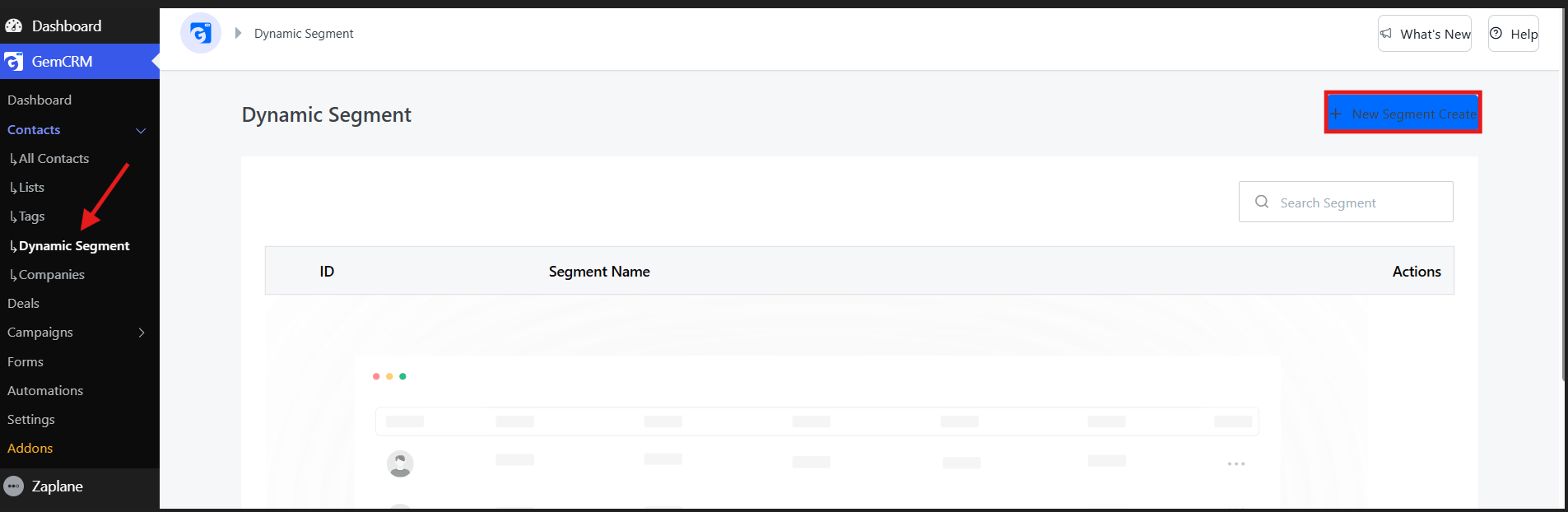
Inside GemCRM, go to Contacts from the left sidebar. Here you’ll find three core organizational tools — Lists, Tags, and Dynamic Segment — each serving a different purpose depending on how you want to group your audience.
Step 3 — Build a Dynamic Segment
Click on Dynamic Segment, then hit + New Segment Create in the top right corner.
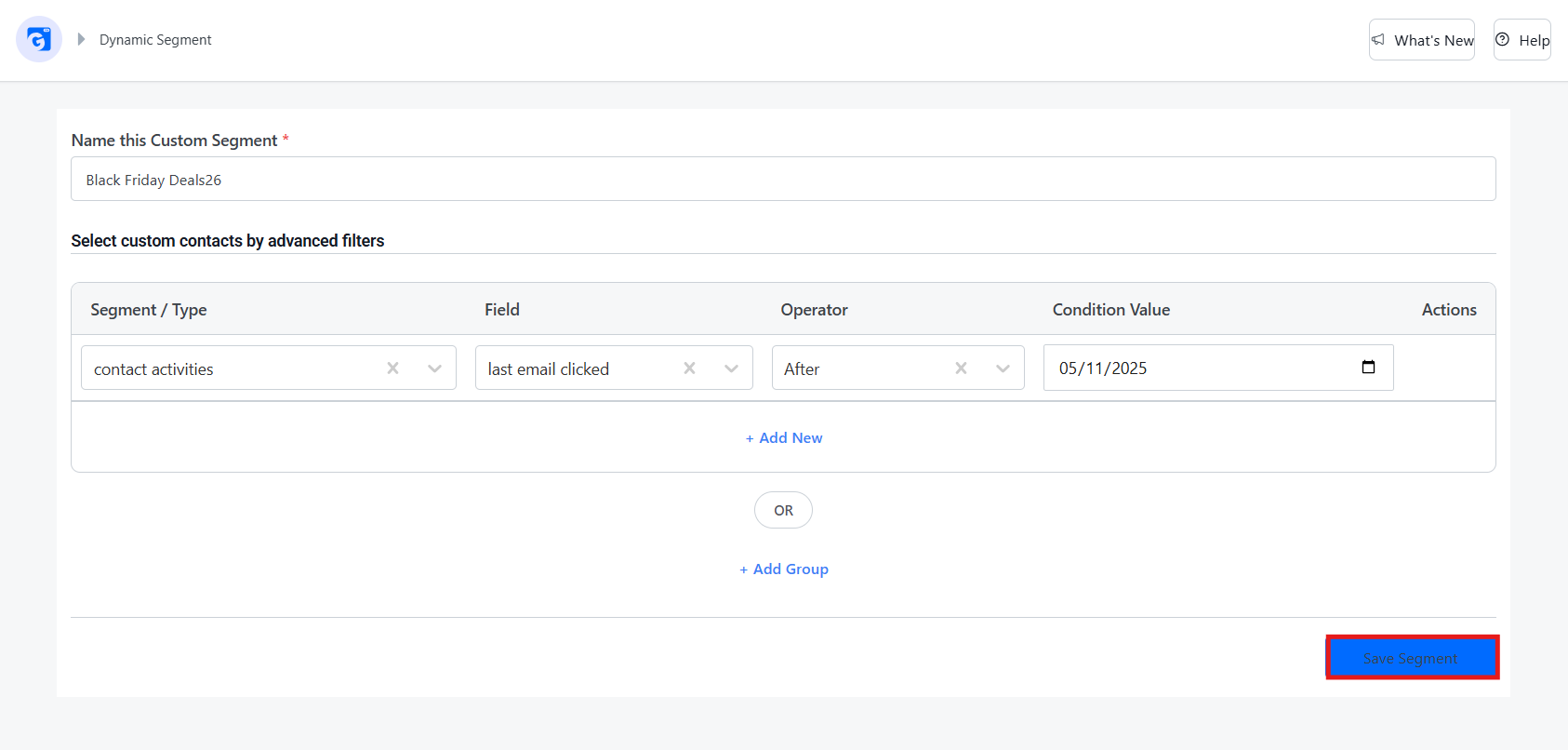
Give your segment a name — for example, Black Friday Deals26. Then set your filter conditions using the advanced filter builder. Click the Segment / Type dropdown to choose how you want to filter:
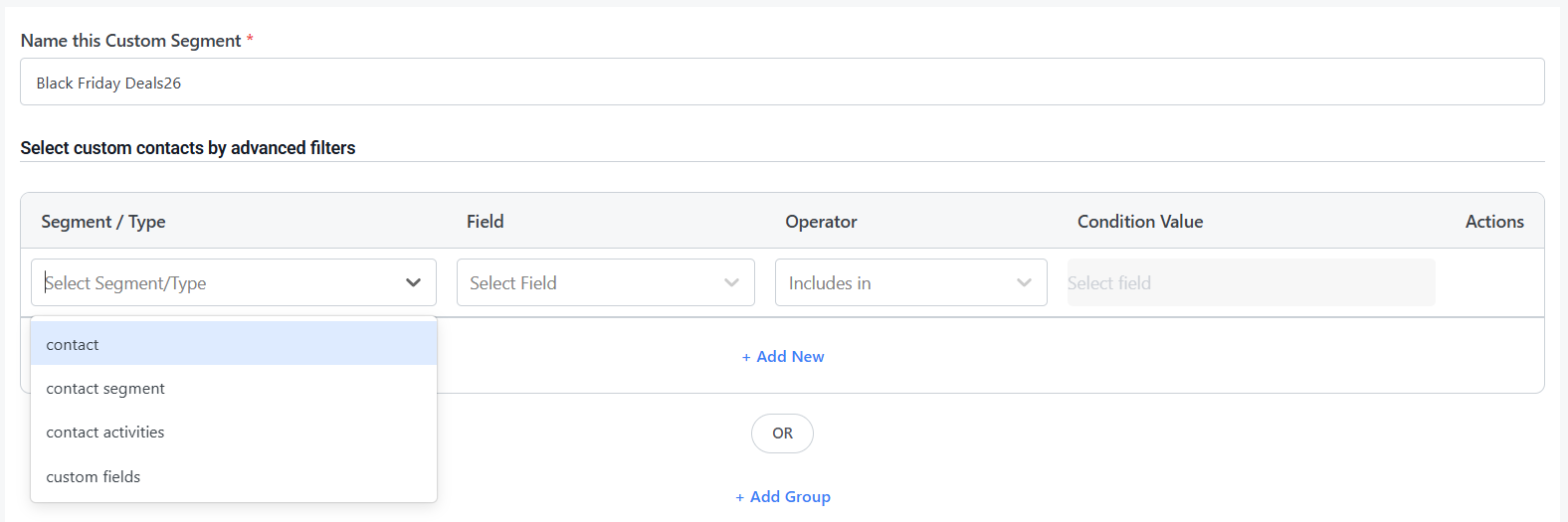
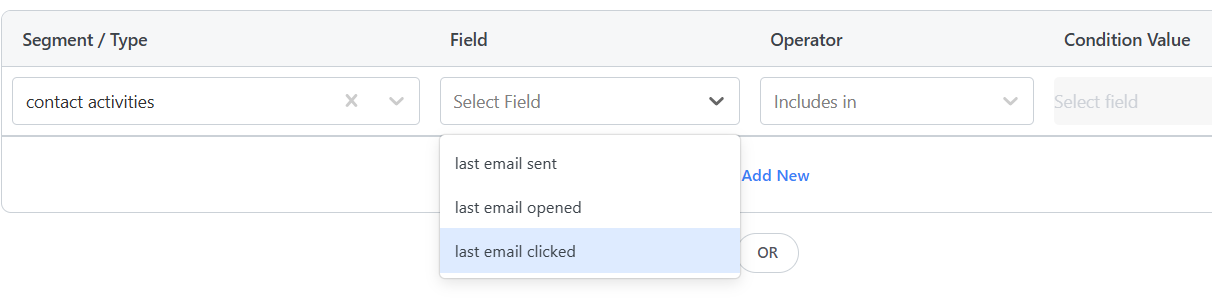
For behavioral targeting, select contact activities. Then open the Field dropdown and select the last email clicked:
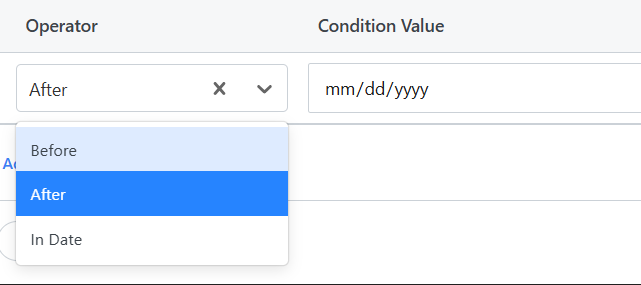
Next, set your Operator. Choose Before, After, or In Date depending on your targeting window:
Once everything is configured, your filter will look like this:
contact activities → last email clicked → After → 05/11/2025
Click Save Segment to finalize.
Step 4 — Launch Personalized Campaigns and Automations
With your segments built, send targeted email campaigns, automated follow-ups, and promotional offers tailored to each group.
Step 5 — Monitor Performance and Refine Segments
Track campaign results, engagement rates, and customer activity over time. Set a regular review cadence. As customer behavior evolves, your segments should too.
Real-World Examples: How the Best Brands Do It
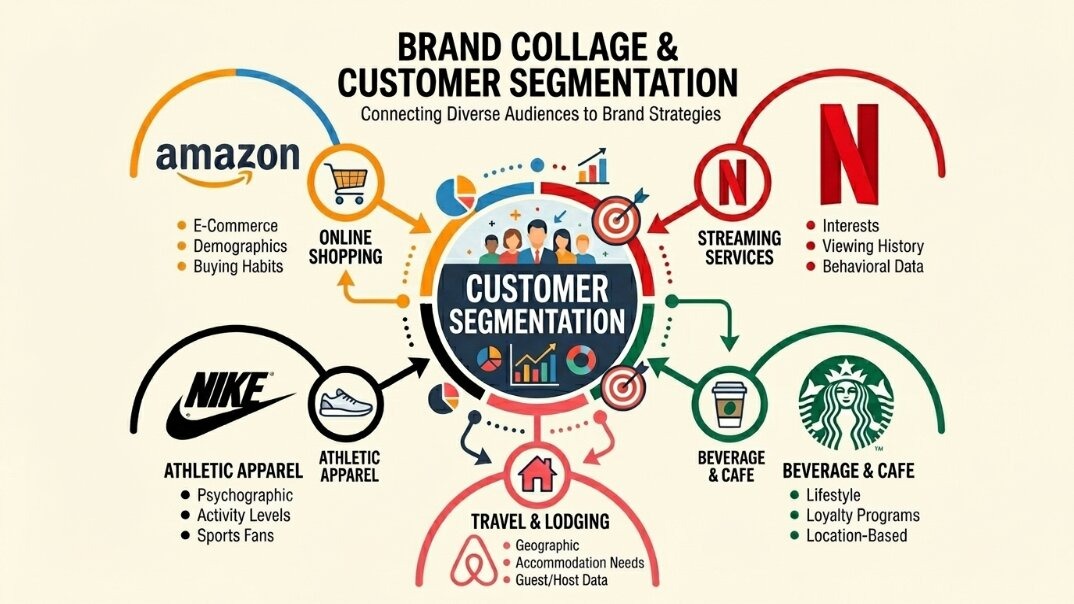
Amazon — The most referenced example for good reason. Amazon segments by browsing and purchase behavior to power its recommendation engine, which generates approximately 35% of total sales through personalized product suggestions. Every “customers who bought this also bought” prompt is a real-time segmentation.
Netflix — Netflix’s algorithms constantly read signals such as viewing history, session duration, preferred genres, skip behavior, time of day, and even which thumbnails attract clicks — forming nuanced viewer segments like “late-night sci-fi fans” or “family binge viewers.” They don’t just recommend content. They serve different thumbnail images to different segments for the same show.
Starbucks — Starbucks segments by visit frequency and occasion, promoting seasonal drinks through its loyalty app to “Gold” members — a strategy so effective that loyalty program transactions now account for 60% of Starbucks’ total revenue in fiscal 2025.
Nike — Nike uses psychographic segmentation based on lifestyle and sport — runners, basketball players, gym-goers. Footwear, their core lifestyle segment, accounts for roughly 68% of Nike’s total revenue.
Airbnb — Airbnb distinguishes between business and leisure travelers, plus experience preferences like “unique stays” versus “budget-friendly.” The segmentation pays off — guests who combine lodging with an Airbnb Experience show 40% higher repeat booking rates.
The pattern is clear: the best brands aren’t guessing. They’re grouping, targeting, and measuring.
Customer Segmentation vs. Market Segmentation vs. Personalization
These three terms get mixed up constantly. Here’s a quick breakdown:
|
Concept |
Focus |
Scale |
Use Case |
|
Market Segmentation |
Broad market groups |
Industry-level |
Product development, market entry |
|
Customer Segmentation |
Existing customer base |
Business-level |
Marketing, retention, sales |
|
Personalization |
Individual customer |
1-to-1 |
Email, product recs, UX |
Think of it this way: market segmentation helps you decide which market to enter. Customer segmentation helps you better serve that market. Personalization is the execution layer — it’s what the customer actually experiences.
Tools Used for Customer Segmentation in 2026
You don’t need enterprise software to get started. But you do need the right tools.
Customer Data Platforms (CDPs) pull data from every touchpoint into one unified profile, giving marketing and sales teams a single, accurate view of each customer. Machine learning clustering identifies patterns in customer behavior that no manual analysis would catch. And AI-based segmentation continuously updates segments as customer behavior shifts — eliminating the problem of static, outdated groups.
Here’s a quick look at what the market offers:
|
Tool |
Best For |
Price Range |
|
WordPress CRM with segmentation, campaigns & automation |
One-time Lifetime License (from $99) |
|
|
CRM + behavioral triggers + workflows |
Free – $20/seat/mo (Starter) |
|
|
E-commerce email segmentation |
Free – $20/mo (500 contacts) |
|
|
CDP for unifying data sources |
Free – $120/mo (Team) |
|
|
Free website visitor segmentation |
Free |
For small to mid-sized businesses, especially, GemCRM is worth a close look. It combines CRM functionality with segmentation tools that let you build targeted lists, automate follow-ups by segment, and track performance — all in one place. If your current setup requires five different platforms just to run a segmented campaign, GemCRM is a smarter starting point.
The Biggest Mistakes Businesses Make With Segmentation
Building segments and never updating them. Markets change. Customers evolve. A segment you built in Q1 may be completely irrelevant by Q4. Build a review process into your workflow.
Over-segmenting. If you have 40 micro-segments and no bandwidth to create tailored content for each one, you’ve just made more work for yourself. Start with 3–5 meaningful segments.
Ignoring behavioral data in favor of demographics. Knowing someone is a 35-year-old male tells you almost nothing about how to sell to him. Knowing he’s visited your pricing page three times this week tells you everything.
Not connecting segmentation to revenue. Financial metrics like revenue, lifetime value, acquisition cost, and profitability help prioritize which segments matter most and where to focus effort. If you can’t connect your segments to business outcomes, they’re just labels. Platforms like GemCRM make this easier by tying your segment data directly to pipeline and revenue tracking — so you always know which groups are actually moving the needle.
Future Trends: Where Customer Segmentation Is Heading in 2027

The trajectory is clear — more real-time, more AI-driven, more privacy-compliant.
AI-based segmentation continuously updates segments as customer behavior shifts, meaning your targeting stays relevant without manual intervention — eliminating static segments built once and never touched.
Predictive segmentation is the next frontier. Rather than grouping customers by past behavior, AI models now forecast future behavior — who’s likely to churn, who’s about to upgrade, who’s one email away from a high-value purchase.
There’s also growing pressure around data privacy. With privacy-first analytics becoming the standard in 2026, the shift is toward first-party and zero-party data — what customers voluntarily share — rather than invasive tracking. Brands that build trust and collect data transparently will have a significant structural advantage.
Final Thoughts
Customer segmentation isn’t a marketing tactic. It’s a business discipline. The brands winning in 2026 — Amazon, Nike, Starbucks — aren’t doing something magical. They’re just organizing information better than their competitors and acting on it faster.
If you’re still treating all your customers the same way, you’re leaving serious revenue on the table.
The good news? Getting started doesn’t require a data science team or an enterprise budget.
GemCRM gives growing businesses the tools to build smart customer segments, automate personalized outreach, and track what’s actually working — without duct-taping five different platforms together. If you’re ready to stop guessing and start growing, it’s worth exploring what’s possible.
Frequently Asked Questions
What is customer segmentation in simple terms?
It’s dividing your customers into groups based on shared traits or behaviors, then marketing to each group differently.
What are the 4 main types of customer segmentation?
Demographic, behavioral, psychographic, and geographic — with value-based (RFM) often added as a fifth.
How is customer segmentation different from the target market?
The target market defines who you want to reach. Customer segmentation defines how you organize and communicate with the customers you already have.
What tools are used for customer segmentation?
HubSpot, Klaviyo, Google Analytics 4, Twilio Segment, and CRM platforms like GemCRM that combine data management with segmentation workflows.